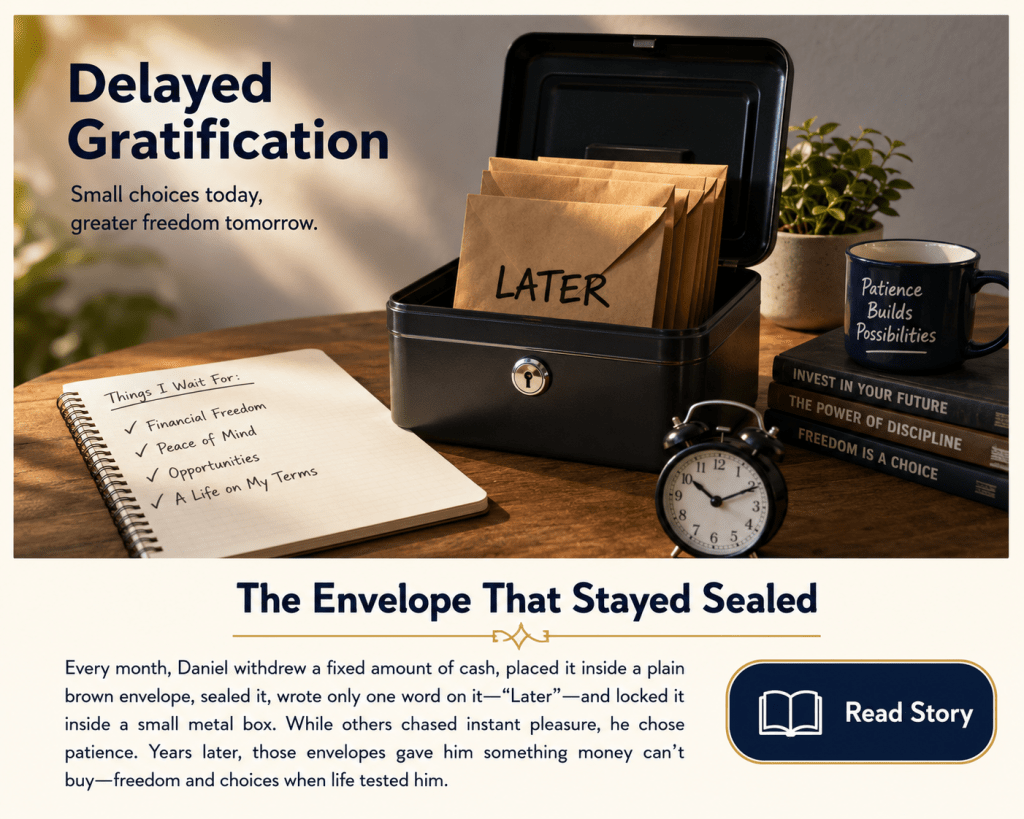
The Envelope That Stayed Sealed
Everyone in the office thought Daniel had made a mistake.
He was twenty-eight, worked as a graphic designer for a fast-growing advertising agency, and earned just enough to finally enjoy the lifestyle he had dreamed about during his broke early twenties. His friends upgraded their phones every year, wore designer sneakers, and spent weekends at rooftop restaurants where one dinner could quietly swallow half a week’s salary.
Daniel could afford those things too. He just… didn’t.
Every month, on payday, he withdrew a fixed amount of cash, placed it inside a plain brown envelope, sealed it, wrote only one word on it—“Later”—and locked it inside a small metal box in his wardrobe.
Nobody knew why.His friends certainly didn’t understand.
“You saving for a Lamborghini?” one joked.
Another laughed. “Life is happening now, bro. Why are you acting like you’re eighty?”
Daniel would smile, shrug, and change the subject.
Even his younger sister once asked, “What if you die before opening those envelopes?”
He smiled again. “Then someone else will enjoy them.”
She rolled her eyes.”You really are strange.” The strange part wasn’t the money itself.
It was that Daniel refused almost every temptation that promised instant excitement but left nothing behind.
He skipped flash sales.
He ignored “Buy Now, Pay Later.”
He walked away from gadgets he could technically afford.
He rented instead of rushing to own.
Whenever something expensive caught his eye, he made himself wait thirty days before deciding, most of the time, by Day Twenty, he no longer wanted it. People mistook his patience for lack of ambition.
In reality, he was training something far more valuable than his bank account.
He was training his mind not to obey every impulse. Years earlier, Daniel had watched his father lose nearly everything.
Not because they were poor, because every raise became permission for a bigger lifestyle.
A newer car, a larger television, luxury furniture bought on installments, vacations financed with next month’s income.
Each purchase felt harmless.
Together, they quietly built a prison.
When business slowed unexpectedly, the family’s income dropped, but the bills didn’t.
Daniel never forgot the look on his father’s face while selling household furniture—not because they wanted to, but because they had to.
That memory became his teacher, he promised himself that excitement would never again dictate his financial decisions.
So every sealed envelope became a small victory over impulse.
Months became years.
The envelopes multiplied.
His friends’ lifestyles became more impressive.
Luxury apartments, weekend flights, expensive watches, their social media looked like advertisements.
Daniel’s looked… ordinary, he still drove the same reliable car, still wore clothes until they genuinely needed replacing, still compared prices before buying.
People whispered that he wasn’t enjoying life. sometimes even Daniel wondered if they were right.
Then one Thursday afternoon, everything changed.
The advertising company announced a restructuring.
Clients had disappeared, revenue had fallen.
Half the staff would be laid off before the month ended.
The office that once buzzed with creative energy became painfully quiet.
Some employees cried, others immediately began calculating which loans they could no longer pay.
One colleague stared silently at his desk.
“I still owe eighteen months on my phone.”
Another muttered, “My rent alone is impossible.”
Daniel lost his job too, he packed his laptop into a cardboard box like everyone else.
But when he reached home, he didn’t panic. he walked to his wardrobe.
Unlocked the metal box, lifted out years of sealed brown envelopes.
One after another, he placed them neatly across the dining table.
Then, for the first time, he opened them, each envelope represented a decision not to chase instant pleasure.
A weekend trip skipped, luxury watch postponed, an unnecessary upgrade resisted, a purchase delayed until it no longer mattered.
By evening, the table held enough money to cover his living expenses for many months.
Not because he had earned more than everyone else.
Because he had learned to wait longer than everyone else.
That waiting gave him something most people never realize they’re buying.
TIME
The following weeks looked completely different for Daniel than they did for many of his former colleagues.
While others rushed into the first available job out of desperation, Daniel became selective.
He updated his portfolio, reached out to former clients, accepted freelance work only when it fit the kind of career he wanted to build.
Eventually, he launched a small design consultancy from home.
It grew slowly at first, then steadily, within two years, the business employed six people—including one of the same colleagues who had laughed about the mysterious envelopes.
One afternoon, while organizing files in Daniel’s office, that former colleague noticed an empty brown envelope framed on the wall.
It contained only one handwritten sentence. “Comfort bought with patience lasts longer than comfort bought with excitement.”
He smiled, “So that’s what those envelopes were.”
Daniel nodded. “They were never about saving money.”
“They were about teaching myself that wanting something immediately doesn’t mean I need it immediately.”
His friend looked around the office.
“You know… I thought delayed gratification meant constantly denying yourself.”
Daniel shook his head.
“No.”
“It means choosing a better reward instead of the nearest reward.”
The room fell quiet.
Outside the office window, the city moved at its usual frantic pace—billboards advertising instant approval, instant delivery, instant success, instant everything.
Yet the strongest foundation Daniel had ever built came from one habit that asked him to do the opposite.
Wait.
Lesson
Delayed gratification isn’t about living a smaller life or refusing every pleasure. It’s about refusing to let today’s impulse steal tomorrow’s opportunities. The greatest reward is rarely the thing you delayed buying—it is the freedom, confidence, and choices that patience quietly gives you when life eventually tests everyone.

 investment4you
Leave a comment