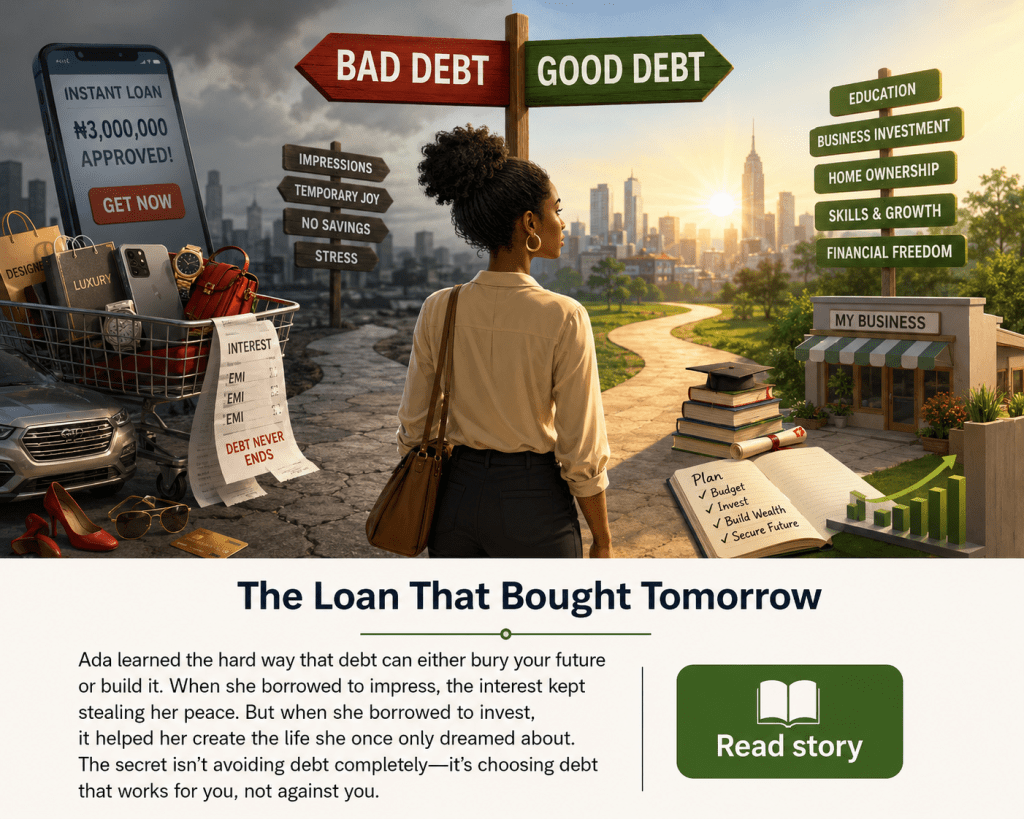
The Loan That Bought Tomorrow
When Ada got her first job, she felt unstoppable.
For the first time in her life, her phone buzzed every month with a salary alert. Friends congratulated her. Family members were proud. And suddenly, banks started sending messages.
“Congratulations! You’re eligible for a ₦3,000,000 instant loan.”
At first, she laughed and ignored them.
Then one afternoon, while scrolling through social media, she saw a colleague driving a brand-new SUV.
Another had just moved into a luxury apartment.
Someone else posted pictures from a vacation in Dubai.
Ada looked around her small rented room.
“Maybe I’m falling behind.”
A week later, she accepted a loan.
Not because she needed it.
Because she wanted to look successful.
She bought the latest phone, expensive furniture, designer clothes, and even hosted a lavish birthday party.
For a few weeks, life felt exciting.
People complimented her.
Her photos received hundreds of likes.
She smiled every time someone said,
“You’re doing well!”
Then reality arrived.
Every month, a large portion of her salary disappeared into loan repayments.
Interest kept growing.
When her landlord increased the rent, she had no savings.
When her younger brother needed school fees, she couldn’t help.
When her company delayed salaries for two weeks, panic replaced confidence.
The expensive phone couldn’t pay her bills.
The designer clothes couldn’t buy groceries.
The likes on social media couldn’t reduce the interest.
One evening, Ada visited her uncle, Mr. Okeke, hoping he could lend her some money.
He listened quietly before asking one question.
“Tell me… what exactly did the loan buy?”
Ada thought for a while.
“It bought comfort.”
Her uncle smiled gently.
“No.”
“It bought appearances.”
Then he picked up two seeds from his garden.
One seed he placed on a rock.
The other he planted in the soil.
“Both cost the same,” he said.
“But only one will produce fruit.”
He continued,
“Debt works the same way.”
“If borrowed money helps you produce more money than it costs you, it can be a good debt.”
“But if borrowed money only buys things that lose value, the debt keeps taking from your future.”
That conversation changed Ada’s life.
She spent the next year paying off her unnecessary loans.
She stopped trying to impress strangers.
She built an emergency fund.
She learned to save before buying.
Years later, when Ada borrowed money again, it was different.
She took a business loan to buy equipment for her side business.
The equipment increased her income enough to repay the loan comfortably.
Later, she took a mortgage to buy a modest home instead of paying rent forever.
Those loans didn’t make her poorer.
They helped her build assets.
One day, a new graduate at work asked her,
“How do I know if a loan is a good idea?”
Ada smiled.
“If the loan helps you earn more, save more, or build something that grows in value, think about it carefully.”
“But if it’s only helping you look richer today while making you poorer tomorrow…”
She paused.
“…walk away.”
Because real wealth isn’t measured by what people think you own.
It’s measured by what you still own after the bills have been paid.
Good Debt vs. Bad Debt
✅ Examples of Good Debt
These are loans that have the potential to increase your future income or build long-term wealth.
- A student loan that helps you gain valuable skills and qualify for a higher-paying career.
- A business loan used to buy equipment, inventory, or machinery that increases profits.
- A mortgage to purchase a reasonably priced home that you can comfortably afford.
- A loan to buy productive tools, such as a delivery motorcycle, sewing machine, or commercial oven for a business.
- A loan to invest in professional certifications or training that significantly improves your earning potential.
❌ Examples of Bad Debt
These are loans used to buy things that lose value or don’t generate income.
- Borrowing money to buy the newest phone when your current one still works.
- Taking a loan for a lavish wedding beyond your means.
- Financing expensive designer clothes or luxury accessories just to impress others.
- Borrowing to fund vacations or parties.
- Using loans to maintain a lifestyle you cannot afford.
- Continuously borrowing to pay off previous consumer loans without solving the underlying spending problem.
The Lesson
Debt itself isn’t the enemy.
The purpose of the debt is what matters.
Before taking any loan, ask yourself these three questions:
- Will this loan help me earn more money in the future?
- Can I comfortably repay it even if my income is temporarily reduced?
- Am I borrowing because I truly need it, or because I want to impress people?
If your answer to the third question is “to impress people,” it’s usually a sign to wait.
Remember: Borrow to build your future—not to decorate your present.
 investment4you
Leave a comment