Lena had just landed her first full-time job.
The salary wasn’t huge, but to her, it felt like a fortune. She treated herself to a new phone, subscribed to three streaming services, ordered takeout almost every weekend, and even booked a short vacation with friends.
“I’m finally living,” she laughed.
Her older cousin, David, smiled but asked one question.
“So… how much have you saved for emergencies?”
Lena shrugged.
“I have my salary. If something comes up, next month’s paycheck will cover it.”
David nodded but didn’t argue.
Three months later, Lena’s phone buzzed while she was at work.
Her landlord needed urgent repairs to the apartment’s plumbing. Every tenant had to contribute toward the cost.
The amount wasn’t impossible, but it was more than Lena had in her bank account.
She checked her balance twice.
Still the same.
She considered borrowing money but hated the idea.
That evening she called David.
“I didn’t think something like this would happen.”
“It rarely happens when we’re expecting it,” David replied. “That’s why it’s called an emergency.”
The next day they met at a small café.
David placed two cups of coffee on the table.
“Imagine we’re going hiking,” he began.
“If I told you there was a chance of rain, would you carry an umbrella?”
“Of course.”
“Even if the sun was shining?”
“I guess so.”
David smiled.
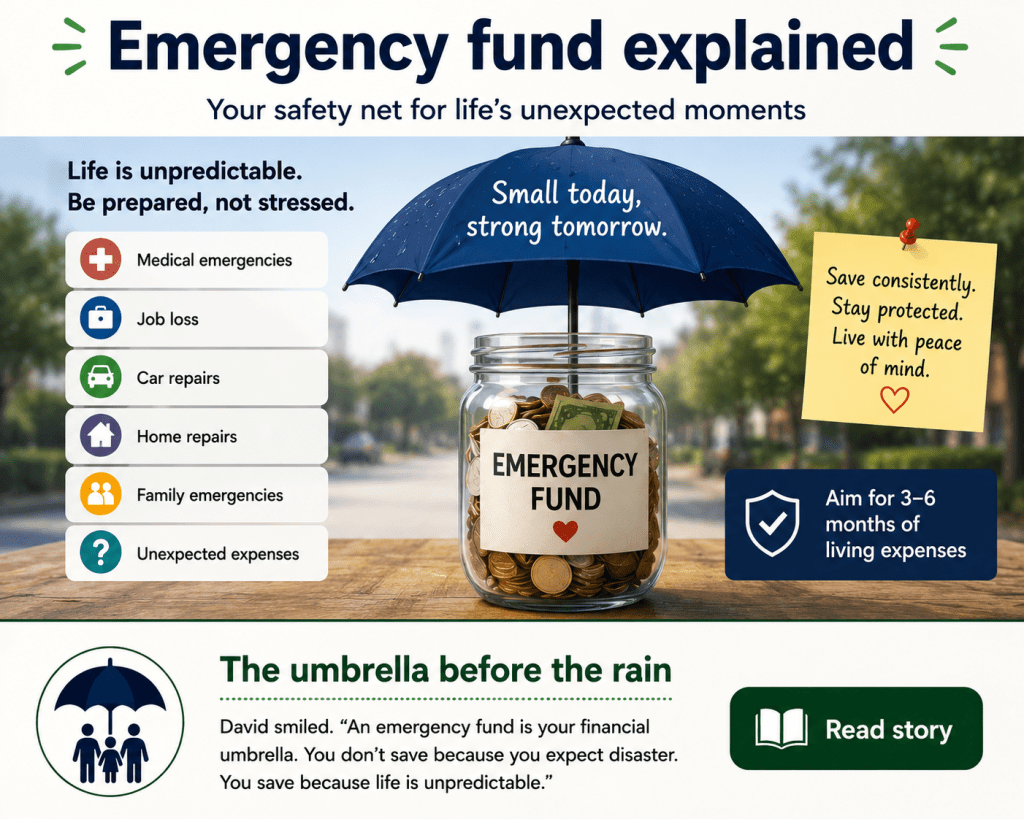
“An emergency fund is your financial umbrella. You don’t save because you expect disaster. You save because life is unpredictable.”
Lena thought about that.
“So it’s not money for shopping?”
“No.”
“Or holidays?”
“No.”
“What is it for?”
David counted on his fingers.
“Medical bills. Losing a job. Car repairs. A broken laptop if you need it for work. Family emergencies. Things you never plan for.”
That weekend Lena opened a new savings account.
She named it ‘Emergency Fund – Do Not Touch.’
She set up an automatic transfer every payday.
It wasn’t much.
Just 20% of her income.
At first the balance grew painfully slowly.
She almost stopped.
Then she remembered David’s umbrella.
Small steps were still steps.
Eight months later, Lena received another unexpected phone call.
Her company announced budget cuts.
Several employees would be laid off.
For a moment, panic filled the office.
People whispered about rent, bills, and loans.
Lena felt nervous too.
But she also remembered something.
Her emergency fund.
It wouldn’t last forever, but it could cover several months of essential expenses while she searched for another job.
Instead of making desperate decisions, she had time to think clearly.
Luckily, Lena kept her job.
But something had changed.
She no longer saw her emergency fund as money sitting idle.
She saw it as peace of mind.
Months later, one of her younger colleagues asked for advice.
“I want to start investing,” he said.
Lena smiled.
“That’s a great goal.”
“But before you invest,” she added, “build your umbrella.”
“My umbrella?”
She laughed.
“An emergency fund. Investments help you grow wealth. An emergency fund protects it.”
Her colleague nodded thoughtfully.
From that day on, every payday, he saved a little before spending anything else.
And just like a single umbrella can keep someone dry through an unexpected storm, one small habit can protect years of hard work.
Lesson
An emergency fund is money set aside for unexpected expenses such as medical bills, job loss, urgent home or car repairs, or other financial emergencies. It helps you avoid debt and gives you time to make better decisions when life doesn’t go as planned.
A good starting goal is to save enough to cover three to six months of essential living expenses. Start with whatever you can afford, stay consistent, and remember: the best time to build your umbrella is before the rain begins.
 investment4you
Leave a comment